Commercial & campus solar
Commercial solar engineered for business campuses
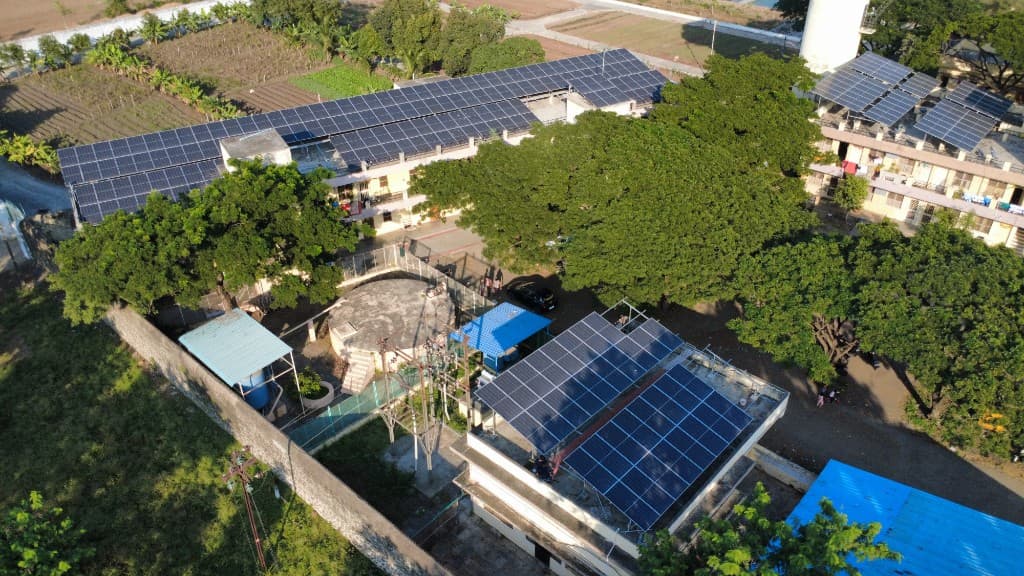
Rolling Energy designs and delivers commercial solar for offices, retail assets, mixed-use campuses, and institutional buildings where daytime HVAC, lighting, and common-area loads dominate the bill. We size systems to real tariff structures—not brochure templates—and execute as a C&I EPC with structural, electrical, and interconnection discipline.
Commercial energy costs keep rising without a controllable offset
Commercial buildings often face escalating DISCOM tariffs, demand charges on HVAC peaks, and tenant or investor pressure for credible green credentials. Roof area is finite, metering can be split across landlords and tenants, and poorly planned solar can conflict with façade aesthetics, fire access, or MEP plant rooms.
- Common-area and HVAC loads drive daytime spend that solar can offset
- Green-lease and ESG disclosures need measurable generation data
- Shared roofs and complex ownership require clear offtake design
How commercial sites typically use power
Most commercial campuses show strong daytime demand from HVAC, lighting, lifts, and IT/MEP services, with lower overnight baseload unless data rooms or 24×7 retail are present. Load curves often align well with solar generation, but transformer headroom, LT panel capacity, and net-metering or captive rules must be checked before capacity is locked.
- Weekday HVAC peaks during occupancy hours
- Seasonal cooling swings that change self-consumption ratios
- Metering that may sit with landlord, facility manager, or tenants
Where commercial solar creates value
Rooftop PV on contiguous commercial roofs can displace grid energy during peak tariff hours and support Scope 2 reduction narratives for owners and occupiers. Where roof area is limited relative to connected load, we evaluate carports, phased blocks, or open-access / group-captive routes so the renewable strategy matches the commercial asset—not just the available slab.
- Rooftop arrays sized for self-consumption and interconnection limits
- Optional carports where guest or staff parking geometry allows
- Open-access advisory when on-site capacity cannot meet targets
Design that respects building operations
Commercial EPC design starts with structural assessment, waterproofing integrity, walkway planning, and cable routes that avoid guest- or tenant-facing clutter. We coordinate earthing, lightning protection, inverter placement, and fire-lane clearances with facility teams so the plant is maintainable for 25+ years.
- Module layout optimized for shading from parapets and HVAC plant
- String or central inverter architecture matched to roof geometry
- As-built packages suitable for lender and green-building review
Commercial models that match ownership
Asset owners may prefer CAPEX with accelerated depreciation where applicable; operators and tenants often evaluate RESCO / PPA or leasing so savings appear in opex without a large balance-sheet hit. We model tariff escalation, export limits, and allocation of savings between landlord and tenant before recommending a path.
- CAPEX, RESCO, PPA, and leasing pathways explained plainly
- Bill analytics tied to actual DISCOM slabs and demand charges
- Support for green financing conversations with lenders
Design that respects building operations
Commercial EPC design starts with structural assessment, waterproofing integrity, walkway planning, and cable routes that avoid guest- or tenant-facing clutter. We coordinate earthing, lightning protection, inverter placement, and fire-lane clearances with facility teams so the plant is maintainable for 25+ years.
- Module layout optimized for shading from parapets and HVAC plant
- String or central inverter architecture matched to roof geometry
- As-built packages suitable for lender and green-building review
EPC execution without disrupting tenants
Installation windows are planned around occupancy, façade sensitivity, and building security rules. Rolling Energy manages survey, engineering, procurement, installation, and commissioning with single-point accountability—including net-metering or interconnection coordination with the local DISCOM.
- Method statements and safety protocols for occupied campuses
- Quality checkpoints on structure, DC/AC works, and earthing
- Commissioning with performance baselines for handover
O&M that protects commercial asset value
Commercial solar underperforms when soiling, inverter faults, or string outages go unnoticed. Our O&M approach pairs preventive cleaning and electrical checks with remote monitoring so facility managers see generation, availability, and exception alerts without becoming PV specialists.
- Scheduled cleaning aligned to local soiling and monsoon cycles
- Inverter and string health reviews with documented close-outs
- Dashboards usable by estates and ESG reporting teams
FAQs
Questions industrial and commercial buyers ask
Is commercial solar worth it if my roof is small relative to connected load?+
Often yes as a partial offset—especially for HVAC and common-area daytime loads—but we also assess carports, phased rooftop blocks, and open-access options when on-site area cannot meet renewable targets alone.
Can solar work when the landlord owns the roof and tenants pay power bills?+
Yes, but offtake and savings allocation must be designed upfront. Models include landlord CAPEX with green-lease pass-through, RESCO serving the meter holder, or shared savings structures agreed in writing.
Will installation disrupt office or retail operations?+
Work is sequenced to protect waterproofing, fire access, and occupied zones. Noisy or roof-access activities are typically scheduled in low-occupancy windows agreed with facility management.
Do you support net metering for commercial buildings in India?+
Where regulations and DISCOM processes allow, we support interconnection and net-metering paperwork. Eligibility, capacity caps, and export treatment vary—so we confirm the applicable pathway during energy analysis.
How do you estimate commercial solar savings?+
We start from recent electricity bills, load timing, tariff structure, and realistic generation estimates for the site. Payback depends on self-consumption, tariff escalation, and financing—not a single statewide average.
Explore further
Related solutions and tools
Ready to evaluate solar or Solar + BESS for your site?
Share your tariff, load profile, and site constraints. Our C&I team responds with next steps for survey, modeling, and commercial options.